
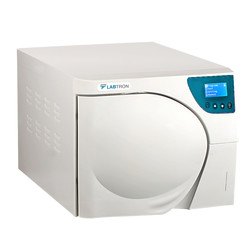


XRD Diffractometer LXRD-A10 contains tube current up to 5 to 80 mA with a dimension 1 × 10 mm/ 0.4 × 14 mm/ 2 × 12 mm and are designed for quality diffraction data, combined with ease of use and flexibility to quickly switch to different applications, This multipurpose diffractometers are all equipped with X-ray tuble of glass tube, ceramic tube, ripple ceramic tube with many different X-ray source materials (Cu, Fe, Co, Cr and Mo) and is coupled with an auto-switching dual wavelength optic. It have Low maintenance, high performance system and designed with Horizontal Goniometer structure and proportional/Scintillation counters detector.
| X-ray Tuble | Glass tube, Ceramic tube, Ripple Ceramic tube: Cu, Fe, Co, Cr, Mo etc., Power 2 kW |
| Focus Size | 1 × 10 mm/ 0.4 × 14 mm/ 2 × 12 mm |
| Stability | ≤ 0.01 % |
| Tube Current | 5 to 80 mA |
| Tube Voltage | 10 to 60 kV |
| Rated Power | 3 kW |
| Goniometer Structure | Horizontal (Ø to 2 Ø ) |
| Radius of Diffraction | 185 mm |
| Scanning Range | 0 to 164 |
| Scanning Speed | 0.0012º to 70 º min |
| Maximum Resolving Speed | 100 º / min |
| Scanning Mode | Ø to 2 Ø linkage, Ø, 2 Ø single action; continuous/stepping scanning |
| Angle Repeatable Accuracy | 1 / 1000 º |
| Minimal Stepping Angle | 1 / 1000 º |
| Detector | Proportional/Scintillation counters |
| Maximum Counting rate of Linearity | 5 × 10⁵ CPS (with the compensate function of dropout counting) |
| Energy Resolution Ratio | ≤ 25 % (PC), ≤ 50 % (SC) |
| Counting Fashion | Differential Coefficient / integral, PHA automatically, Dead time regulate |
| Stability of System measure | ≤ 0.01 % |
| Scattered Rays Dose | ≤ 1 µ Sv/h (without X-ray protective device) |
| Instrument Integrative Stability | ≤ 0.5 % |
| Dimension | 1100 × 850 × 1750 mm |
| Weight | About 25 kg |
- Diffractometer is equipped with X-ray tuble of glass tube, ceramic tube, and ripple ceramic tube with many different X-ray source materials (Cu, Fe, Co, Cr and Mo)
- Coupled with an auto-switching dual wavelength optic
- Horizontal Goniometer structure
- Proportional/Scintillation counters detector
- For testing unknown samples it has phase identification and phase analysis for known mixed samples
- Crystal structure varies with temperature (high temperature vice versa) factor and chemical information tested by X-ray diffraction test device
- Equipped with programmable operation, integrated structure design with easy operation and well-designed outlook
- High throughput with high accuracy diffraction angle measurement
- Scanning range and Scanning speed are well design in equipment
Best suited for the research and industrial product analysis with perfect combination of conventional analysis crucial measurement product and for academics and researchers in different application areas.

ICP Spectrometer
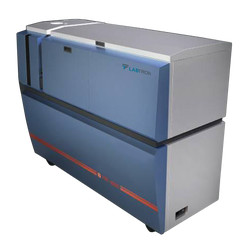
ICP spectrometer LICP-A10
- Wavelength range ( 3600 lines / mm )
- 180 to 500 nm
- Wavelength range ( 2400 lines / mm )
- 180 to 800 nm
- Temperature
- 20 ~ 28 °C
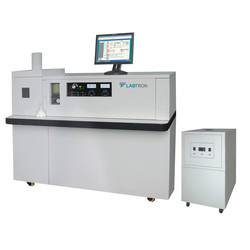
ICP Spectrometer LICP-A11
- Wavelength range
- 180 to 900 nm
- Elements per minute
- 15 elements
- Temperature
- 29 °C
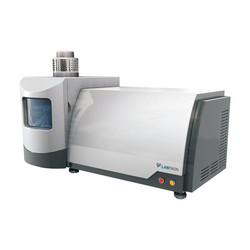
ICP Spectrometer LICP-B10
- Monochromator Specifications
- Czerny turner
- Solid State Power Specifications
- 27.12 MHz Frequency stability: < 0.05%
- Technical Specifications
- Liquid sample: 0.01 ppm to several thousand ppm Solid or power sample: 0.001% to 70%
XRF Spectrometer
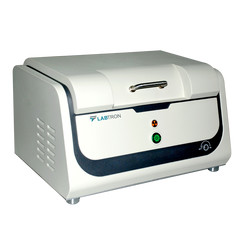
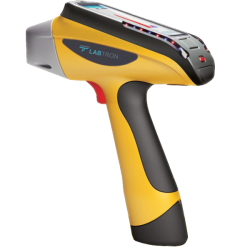
Handheld XRF Spectrometer LXRF-B10
- Analytical Method
- Energy dispersive X-ray fluorescence analytical Method
- Elements Measuring
- Atomic number from 12 to 92 [elements from magnesium (Mg) to uranium (U)] can be measured
- Range
- Simultaneous detector

Handheld XRF Spectrometer LXRF-B11
- Analytical Method
- Energy dispersive X-ray fluorescence analytical Method
- Elements Measuring
- Atomic number from 12 to 92 [elements from magnesium (Mg) to uranium (U)] can be measured
- Range
- Simultaneous detector